A Stanford-led modeling study published on August 18 in The Lancet Planetary Health concludes that the threat rising temperatures pose to the health of older people has been 「dramatically underestimated」 — and that each additional degree of warming will push roughly a billion more people over 60 through an extra month of heat their bodies cannot tolerate. At 1.5°C of warming above pre-industrial levels, the team estimates 22 percent of the world's over-60 population will be exposed to unsafe heat for at least a month every year; at 3°C, the worst-affected regions — South Asia and the Gulf — could face dangerous heat day and night for three straight months.
What Changed in the Modeling
The new paper, led by Qinqin Kong at Stanford and published as 「Exceeding human heat tolerance in a warming, ageing world」 (DOI 10.1016/j.lanplh.2026.101494), updates previous modeling with newer wet-bulb experiments testing how people over 60 tolerate combined heat and humidity. The previous threshold for what counts as 「intolerable」 heat underestimated older adults' vulnerability, the team argues, because it relied on data from younger test subjects. Once corrected for the larger and more vulnerable over-60 share of the global population — projected to nearly double by 2050 — the share of humanity exposed to dangerous heat rises sharply.
Why 1.5°C Matters at the Margin
The 1.5°C scenario is the long-standing Paris Agreement guardrail, and the paper's central quantitative claim is that 「uncompensable」 heat exposure scales steeply with each additional tenth of a degree. At 1.5°C, 22 percent of over-60s are exposed for a month or more each year; at 2°C, the figure rises materially; at 3°C, the worst-affected regions — India, Pakistan, Bangladesh, Myanmar, and the Gulf — face three continuous months of unsafe day-and-night heat. The authors stress that most heat-related deaths happen indoors, meaning access to air-conditioning and other cooling facilities is now a first-order public-health intervention, not a luxury.
What It Means for Climate Migration
The authors warn that the new numbers have direct implications for human movement. 「These results suggest that uncompensable heat could increasingly drive internal displacement and transboundary climate migration, raising new policy and humanitarian challenges,」 the paper concludes. The countries facing the greatest threat, the team found, are those with high levels of poverty and limited access to cooling — exactly the regions where indoor heat mortality is highest and where adaptive capacity is lowest.
How It Connects to This Summer
The Lancet paper lands in the middle of what is on track to be Europe's hottest summer on record and after a WMO update earlier in August confirming July 2026 tied with July 2024 as the warmest July on record globally, with average surface air temperatures 1.47°C above the 1850–1900 pre-industrial baseline. The WMO update also warned of 「exceptionally high temperatures across a large portion of the tropical Pacific」 — the fingerprint of a strengthening El Niño that is on track to push monthly global average temperatures above 2°C during the peak Northern Hemisphere summer months. The Lancet paper's contribution is to put a number — one billion more people per degree of warming — on what that headline looks like in human terms.
Related Articles
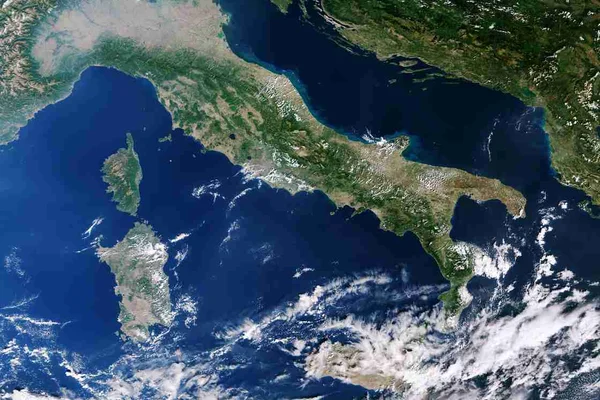
Copernicus report finds summer 2026 was Europe's hottest on record with 52 percent heat stress
The EU climate monitor said 52 percent of the continent faced feels-like temperatures above 38 degrees Celsius, Western Europe's hottest summer on record and the third warmest for Europe overall.
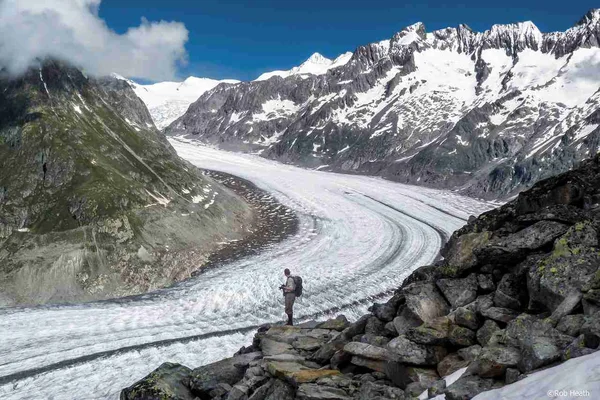
Swiss glaciers lose 5.5 percent of their ice in 2026 as five year melt nears one fifth
Switzerland's glaciers have now lost 19.4 percent of their volume in five years, and glaciologists warn that the ice is collapsing from the inside as melt rates explode.
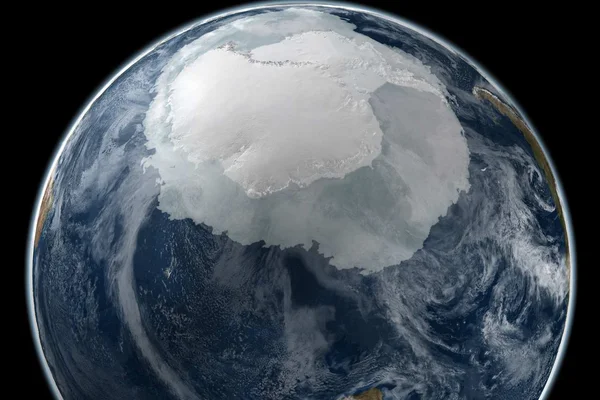
Antarctic winter sea ice hits third lowest maximum on record as four worst years cluster since 2022
Provisional satellite data show the Southern Ocean's winter ice cover peaked on 14 September at 17.59 million square kilometers, the third smallest in a record that begins in 1979.
Comments (0)
Log in or sign up to leave a comment.
No comments yet. Be the first to share your thoughts.