China's Ministry of Commerce released H1 2026 trade data this week showing that industrial robots and 3D printers led the country's AI-related export surge, up 18.6% and 109.3% year over year respectively. Behind those headline numbers is a quieter story: China's humanoid-robot supply chain has quietly become the default for the global industry.
The Numbers Behind the Headline
Industrial robots exported from China cleared $1.42 billion in H1, with humanoid-class arms, harmonic reducers, and force-torque sensors representing the fastest-growing sub-segments. 3D-printer exports, which now include the metal-powder-bed machines used to print humanoid joint housings, jumped to $1.08 billion.
"Chinese suppliers now control roughly 70% of the global capacity for planetary roller screws and 60% for harmonic reducers - the two components that matter most for humanoid joints," said a senior analyst at a Shenzhen-based robotics consultancy.
Who Is Buying
U.S. humanoid developers Figure AI and Apptronik, Japan's Toyota Research Institute, and several European automotive integrators have all increased sourcing from Chinese vendors since 2024. The drivers are cost (typically 40-60% lower than Japanese equivalents) and lead time (8-12 weeks versus 24-36).
The Policy Backdrop
The export boom coincides with the Ministry of Industry and Information Technology's "Jie Bang Gua Shuai" program, which designated humanoid robots, embodied AI, and laser manufacturing as priority sectors this year. Domestic champions Unitree, Agibot, UBTech, and Galbot have all received direct subsidies to expand capacity.
For Western integrators, the strategic question is no longer whether to source from China but how to harden supply chains against future export controls - a calculus that now looks very similar to the one applied to lithium batteries and solar panels a decade earlier.
Related Articles
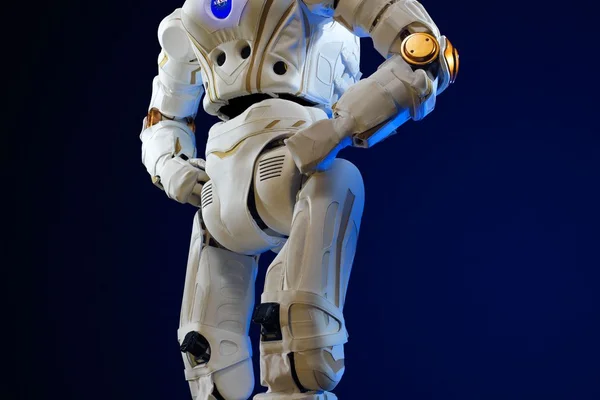
GMO unveils Japan's first robot ambulance to repair humanoid robots on site in Tokyo
GMO Air's new van brings engineers, spare parts and a replacement humanoid to broken robots in Tokyo, aiming to cut downtime for operators.
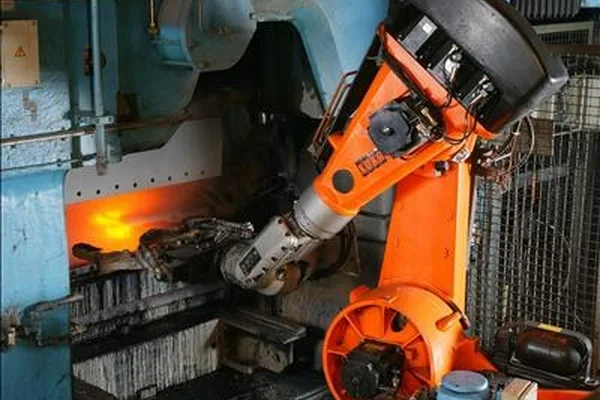
Maven Robotics exits stealth with $100M Series A for general purpose industrial robots
The Santa Clara startup says its wheeled robots already handle mixed palletizing for a Fortune 250 consumer goods customer and has raised $100 million to build 250 more units.

Swarmer to acquire Ukraine's Ratel Robotics for up to $224 million in cash and stock
Swarmer will pay about $7.2 million in cash and 1,064,942 shares at closing for the Ukrainian maker of battlefield ground robots, with the rest tied to earnouts through 2028.
Comments (0)
Log in or sign up to leave a comment.
No comments yet. Be the first to share your thoughts.