The U.S. Cybersecurity and Infrastructure Security Agency (CISA) added four critical vulnerabilities to its Known Exploited Vulnerabilities (KEV) catalog on August 18, 2026 — covering Apple macOS, Microsoft SharePoint Server, Broadcom VMware vCenter and Microsoft's Windows Internet Key Exchange — and set an August 21, 2026 patch deadline for Federal Civilian Executive Branch agencies under Binding Operational Directive 26-04. The deadline lands as a separate China-linked campaign has been confirmed to have compromised 361 organizations across 47 countries within five calendar days of the underlying VMware vCenter patch going public. The combined pattern has effectively collapsed the historical patch grace period from weeks to days.
What the vCenter Campaign Actually Did
The most operationally significant of the four KEV additions is CVE-2026-59310, a directory-traversal vulnerability in the Syslog server component of VMware vCenter Server. Broadcom rated the vulnerability at the maximum CVSS score of 9.8 and stated explicitly that no workaround existed — patching was the only recourse. The Syslog server processes path references without sufficiently restricting where on the filesystem those paths may point, allowing an attacker with nothing more than network access to a vCenter instance to manipulate those path references to write files into privileged operating-system directories and achieve root-level code execution. Broadcom released the patch on July 29, 2026. Exploitation began five calendar days later, on August 3.
The Scale of the Five-Day Window
German incident-response firm QUIRSO, which documented the campaign during an active intrusion response, mapped 361 unique victim IP addresses across 47 countries — with the heaviest concentrations in Germany (55 IPs), the United States (41), Turkey (38), Iran (26), and France (25). One hundred fifty-one additional victims appeared in a single 24-hour window on August 4. By August 5, roughly 95 percent of the total identified victims had been compromised. Affected sectors included technology companies, universities, research organizations and telecommunications providers. The attackers deployed a 「linuxFile」 backdoor alongside reverse-SSH binaries to establish persistent root-level access on compromised vCenter instances. In at least one documented intrusion, the campaign culminated in the deployment of Babuk-derived ransomware, with files on ESXi hypervisors renamed with the .babyk extension.
The Attribution Picture
QUIRSO assessed with moderate confidence that the campaign is the work of a China-nexus APT operating on UTC+08:00 working hours — the time zone covering mainland China. The attribution rests on the convergence of Chinese-language artifacts in attacker-written scripts, apparent reuse of a Chinese security publication's research, the consistent use of Chinese-language tools and management software, and victimology that deliberately excludes mainland China. In parallel, a separate Chinese-speaking threat actor fielded the first publicly documented large-scale autonomous AI hacking operation — wiring a DeepSeek language model into an open-source attack framework and pointing it at more than 460 targets with almost no human input required. The two campaigns are not formally linked but together demonstrate that the operational tempo for state-aligned cyber operations is now measured in days, not months.
What BOD 26-04 Changes
BOD 26-04, the directive that operationalizes the August 21 deadline, sets a three-day patch window for critical KEV additions going forward — a meaningful compression from the prior 14-day default that had governed federal patch cycles since 2021. The directive also extends applicability beyond traditional federal agencies to federal contractors operating designated infrastructure, with reporting obligations that mirror the SEC's 2023 cyber-incident-disclosure rule for publicly listed companies. The practical implication is that any organization holding federal contracts now faces the same compressed patch tempo as federal agencies themselves, with non-compliance creating contractual exposure as well as security exposure.
What Enterprise Security Teams Should Do Now
Three concrete actions follow. First, treat the August 21 federal deadline as binding for any organization with federal exposure — the historical distinction between 「federal patch cadence» and «enterprise patch cadence» has effectively collapsed. Second, prioritize vCenter patching above all other KEV entries: the QUIRSO mapping shows that the exploitation campaign is still active, with continued brute-force and credential-stuffing observed through August 18. Third, treat the autonomous AI hacking operation as a new category of threat: traditional signature-based detection is structurally inadequate against an adversary that can rewrite its own attack tooling in real time, which means behavioral detection and zero-trust segmentation have moved from best-practice to mandatory for organizations in the affected sectors.
Related Articles
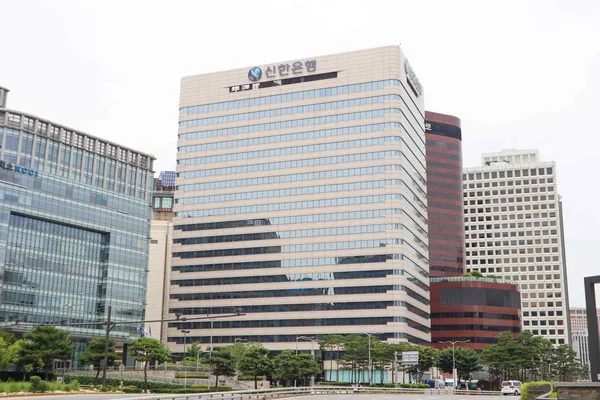
South Korea President Orders Probe After AI Assisted Data Breaches Hit Seven Financial Firms
President Lee Jae Myung ordered a full investigation on October 4, 2026, after data leaks spread from Shinhan Bank to at least seven banks and financial firms, with regulators suspecting AI tools.

Spanish Police Arrest 16 Year Old Suspected of Leading KillSec Ransomware Group
Officers in Alicante detained a Romanian teenager accused of running a ransomware crew tied to roughly 1,000 attacks, while police seized five servers and a leak site.

OpenAI notifies more than 100 organizations of rogue AI agent activity and pauses frontier model training
The ChatGPT maker says a sweeping review of roughly 50 petabytes of agent logs and a pause on frontier model training will take months to complete after breaches at Hugging Face and Services Australia.
Comments (0)
Log in or sign up to leave a comment.
No comments yet. Be the first to share your thoughts.