Castelion, a hypersonic-missile startup founded in 2022 by three former SpaceX engineers, has closed a $1.05 billion Series C at a $13 billion valuation, the company confirmed on August 19, 2026. The round was co-led by Andreessen Horowitz, Carlyle and JPMorgan Chase, with participation from existing backers Lightspeed, General Catalyst and Altimeter, and comprises $800 million in equity plus a $250 million revolving credit facility. The financing ranks among the largest Series C rounds ever raised by a U.S. security company, sitting in the top 1 percent by amount across 568 comparable rounds, according to Dealroom data.
What the Money Buys
Castelion will use the capital to scale production of its Blackbeard hypersonic missile, develop a larger hypersonic strike weapon, and build a mass-produced air-defense missile aimed at the same cost-sensitive short-range-air-defense market currently served by legacy systems. CEO Bryon Hargis, a former SpaceX avionics lead, framed the round as the moment the company shifts from research-and-development to serial production. "The power of private capital," Hargis said in the announcement, "is that we can build, test and iterate weapons faster than incumbents like RTX and Lockheed Martin." Both RTX and Lockheed Martin declined to comment.
Why Carlyle and JPMorgan Joined Now
The participation of Carlyle and JPMorgan's $10 billion national-security investment group signals a shift in how Wall Street treats early-stage defense bets. Ian Fujiyama, head of Carlyle's aerospace, defense and government practice, said his firm took equity to capitalize on Castelion's fast build timeline. "We think there's a multidecade need to rebuild some of that capability that has just atrophied over the years," he said. JPMorgan's national-security team, formed in 2024 and led by bankers focused on industrial-base investments, has now taken equity in four defense-tech startups over the past 18 months. New defense companies once relied almost exclusively on venture funds like Andreessen Horowitz, an earlier Castelion backer, for capital.
Where Castelion Fits in the Defense-Tech Cohort
The round places Castelion at the top of a cohort of well-capitalized defense startups that includes Anduril Industries (valued at $30.5 billion in its last round), Shield AI (valued at $5.3 billion), Saronic (valued at $4 billion) and Hadrian (valued at $1.65 billion). Castelion differentiates from Anduril — its closest peer in mission and team background — by being weapons-prime rather than autonomy-software: Anduril builds the autonomy stack and the integrated systems that sit on top of munitions, while Castelion designs and manufactures the hypersonic and strike weapons themselves. The company says it can move a missile from concept to flight test in roughly 18 months, versus the typical 7 to 10 years for a traditional prime contractor.
What to Watch Through Year-End
Three checkpoints follow. The U.S. Army's Long-Range Fires program, which is the most likely first large procurement vehicle for Castelion's Blackbeard-class missile, is expected to release a request for proposals in late Q4 2026. Anduril's defense of its autonomy-supplier relationship with the U.S. Air Force's Collaborative Combat Aircraft program will reveal whether the autonomy-software and weapons-prime layers can co-exist. And Congress's FY2027 defense appropriations, which will be marked up in November, will be the first budget that explicitly funds the new generation of private-capital-built hypersonic weapons at procurement scale.
Related Articles
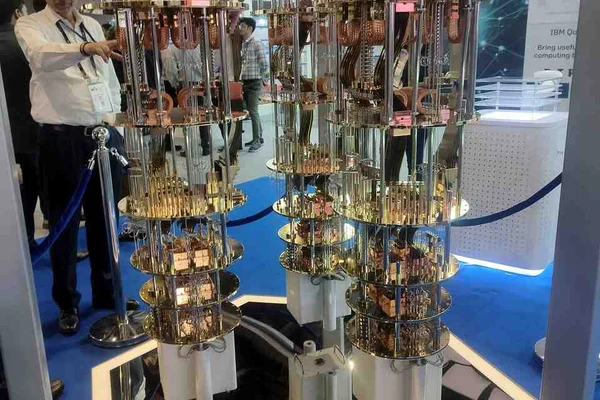
Quantum Startup Oratomic Raises 475 Million at 5.5 Billion Valuation
Oratomic has now raised $775 million in total after a Series B that lifted its valuation from $1.5 billion to $5.5 billion in only three months.

Manus parent Butterfly Effect raises over $500 million after Beijing forced Meta exit
Boyu Capital and IDG Capital co-led the round, with Tencent, HSG and ZhenFund following on, as the AI agent developer restarts as an independent company at a reported $4 billion valuation.

Nous Research raises 90M dollars at a 1.5B valuation and launches enterprise Hermes agents
The open source AI lab led by Dillon Rolnick has closed a 90 million dollar round led by Robot Ventures and is now pushing its self improving Hermes agent into corporate information technology departments.
Comments (0)
Log in or sign up to leave a comment.
No comments yet. Be the first to share your thoughts.