Boston Dynamics' Atlas humanoid robot can now autonomously return to a battery station, replace a depleted battery in under three minutes, and resume working without a person performing the swap, according to specifications for the production version of the robot, TechRepublic reported August 7. Atlas gets roughly four hours of battery life during typical use and around two hours during heavy lifting — while a conventional recharge takes about 90 minutes.
Designed for Continuous Operation
The self-swapping capability is part of Boston Dynamics' effort to turn Atlas from a demonstration machine into an industrial robot capable of operating across long shifts with minimal human intervention. The robot's limbs can also be replaced in the field in under five minutes, and onsite maintenance teams can be trained to service entire fleets. The company says the production Atlas was designed with continuous industrial operation in mind.
From Lab to Factory Floor
Boston Dynamics unveiled the production version of Atlas at CES 2026, and its initial 2026 deployments are already committed: early Atlas fleets are heading to Hyundai Motor Group's Robot Metaplant Application Center and to Google DeepMind, where the companies are developing and training the platform. Hyundai's roadmap calls for Atlas to begin validated manufacturing tasks at its Georgia Metaplant in 2028, starting with parts sequencing, with more complex assembly targeted for 2030 — and production capacity of as many as 30,000 robots annually by 2028.
Skills That Spread Like Software
Once one Atlas learns a new task, that capability can be deployed across the entire fleet, making robotic behavior look increasingly like software. Boston Dynamics is also working with Google DeepMind on integrating Gemini Robotics foundation models with Atlas to expand its cognitive abilities for industrial tasks.
Related Articles
FieldAI signs term sheet for $700M raise at $10B valuation for robot brain
The Irvine-based robotics software startup has signed a term sheet for a $700 million round that would value it at $10 billion, up from $2 billion in 2025, as investors bet on a universal robot brain.
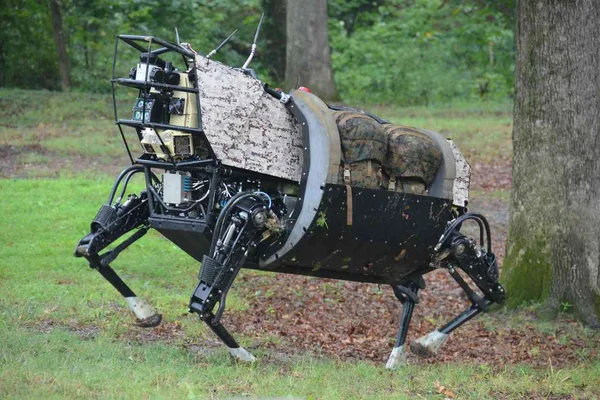
Boston Dynamics Drops Pinky on New Atlas Hand Built for Mass Production
The Hyundai robotics unit has replaced a seven degree of freedom hand with a four finger design that targets 100,000 units a year and skips the pinky entirely.
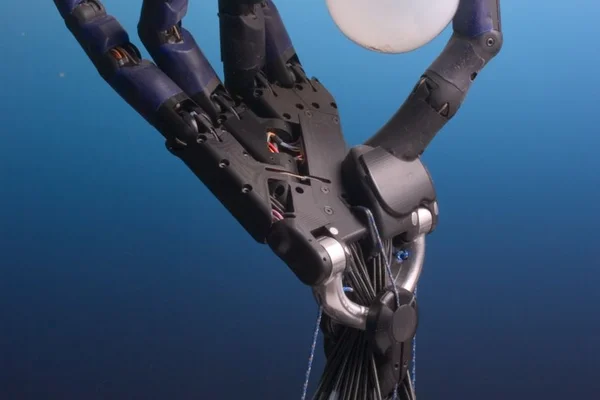
Agility Robotics and FORT Robotics Sign MOU to Extend Digit 5 Safety Beyond the Robot
The October 1, 2026 memorandum of understanding makes FORT Robotics the off-robot safety layer for Agility's next-generation humanoid, pairing an existing component supply relationship with joint compliance work.
Comments (0)
Log in or sign up to leave a comment.
No comments yet. Be the first to share your thoughts.