Antarctic sea ice extent has fallen to its lowest level on record, a peer-reviewed study released this week by an international team of polar climatologists reports. The paper attributes the collapse to a "triple whammy" — surface warming, intensified circumpolar winds, and a build-up of ocean heat in the upper Southern Ocean — and warns that previous season-end minima will be routinely broken through the late 2020s. The August 13 study lands the same week that a separate August 17 analysis found a counterintuitive cooling and sea-ice expansion trend in the Greenland Sea over the past two decades.
What the Triple Whammy Paper Found
The lead paper, summarized in a science round-up published Monday, identifies three drivers working in concert. First, surface warming across the Antarctic Peninsula and Weddell Sea delays autumn sea-ice formation by an average of 18 days compared to the 1991-2020 baseline. Second, intensified circumpolar winds advect the newly formed ice northward into warmer waters where it melts. Third, the upper Southern Ocean has stored more heat than the 1990s climatology projected, providing an additional meltwater pulse during winter.
Why the Greenland Sea Result Looks Like a Counter-Signal
A separate August 17 study reports a significant expansion of sea ice and a cooling trend in the Greenland Sea over the past two decades — a regional counter-signal that complicates global ice narratives. The authors attribute the localized cooling to changes in the Atlantic Multidecadal Oscillation and increased freshwater export from the Arctic. The contrast underscores that climate-system responses are spatially heterogeneous: a record Antarctic minimum and a Greenland Sea regional cooling can both be true in the same month.
Implications for Modeling and Policy
The Antarctic result strengthens the case — made repeatedly this year by Copernicus, NOAA, and the World Meteorological Organization — that 2026 is on track to break the previous hottest-year record set in 2024. "We are likely to see 2026 set a new global temperature record, with Antarctic sea-ice collapse and tropical Atlantic heat anomalies both contributing," the climate-and-economy newsletter wrote this week. The new Antarctic and Greenland papers will feed into the IPCC's AR7 baseline assessment and into the EU's climate-risk stress tests for European banks.
What to Watch
Three near-term metrics matter: the September 2026 Antarctic sea-ice seasonal minimum, the November 2026 NOAA-led cryospheric briefing, and the December 2026 update to the Arctic Report Card. Each will test whether the August Antarctic findings hold for the rest of the year or whether the seasonal rebound pattern reasserts itself.
Related Articles
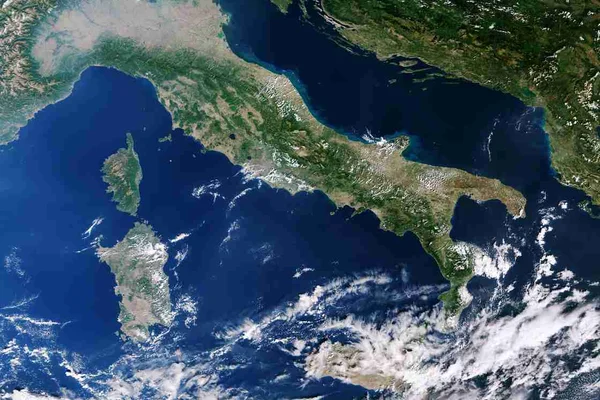
Copernicus report finds summer 2026 was Europe's hottest on record with 52 percent heat stress
The EU climate monitor said 52 percent of the continent faced feels-like temperatures above 38 degrees Celsius, Western Europe's hottest summer on record and the third warmest for Europe overall.
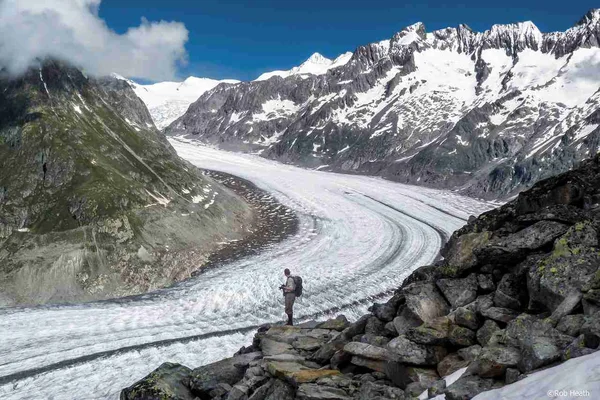
Swiss glaciers lose 5.5 percent of their ice in 2026 as five year melt nears one fifth
Switzerland's glaciers have now lost 19.4 percent of their volume in five years, and glaciologists warn that the ice is collapsing from the inside as melt rates explode.
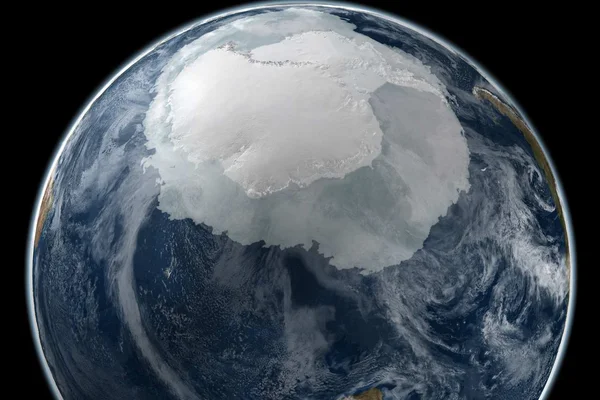
Antarctic winter sea ice hits third lowest maximum on record as four worst years cluster since 2022
Provisional satellite data show the Southern Ocean's winter ice cover peaked on 14 September at 17.59 million square kilometers, the third smallest in a record that begins in 1979.
Comments (0)
Log in or sign up to leave a comment.
No comments yet. Be the first to share your thoughts.