Zeroth, a robotics company building what it calls physical AI systems, launched a compact humanoid robot named Bridge on September 2, 2026, alongside an open-source developer ecosystem called OpenBridge. The company is positioning Bridge as the world's first AI-native embodied robot, meaning it was designed from the ground up for machine learning rather than retrofitted with intelligence after the fact. Business Wire reported on Sep 2 that the robot stands 88 centimeters tall, weighs approximately 13 kilograms and features arms that span 30 to 40 centimeters with two-finger grippers, a form factor aimed at research and development rather than at performing human-scale jobs. The launch is notable less for the hardware specifications than for the strategy behind them: Zeroth is betting that the robotics industry will follow the same open-ecosystem path that Android carved out in smartphones.
The announcement pairs the robot with OpenBridge, which Zeroth describes as a fully open-source ecosystem for embodied intelligence, including an SDK, motion libraries and a robot hub where developers can share capabilities. The open-source components extend to the hardware itself, with the company publishing drawings, electrical topology and enclosure notes on GitHub. The AI Insider reported on Sep 2 that OpenBridge is designed to let developers create, test and share robot skills, an approach that echoes the app-store model that turned smartphones into platforms. Zeroth's Chinese-language announcement, covered by Sina Finance on Sep 2, described the move as an Android moment for embodied intelligence, a reference that signals the company's ambition to define the standard layer that other robot builders build on top of.
Key Facts
Business Wire reported on Sep 2 that Zeroth launched Bridge as the world's first AI-native embodied robot, with a compact humanoid form standing 88 centimeters tall and weighing approximately 13 kilograms, with 30 to 40 centimeter arms and two-finger grippers. The same release announced OpenBridge, a fully open-source ecosystem for embodied intelligence that includes software development kits, motion libraries and a developer hub for sharing robot capabilities. RoboticsTomorrow carried the announcement on Sep 2 and noted that the platform is aimed at developers building physical AI rather than at consumers or industrial customers. The AI Insider reported on Sep 2 that the robot and ecosystem are designed to move embodied intelligence toward a model in which robot capabilities are shaped not only by manufacturers but also by a global community of developers.
Zeroth's open-source commitment extends into the hardware. The company's OpenBridge GitHub repository, referenced in the Sep 2 launch materials, publishes the hardware boundary for the robot, including drawings, electrical topology, enclosure and interface notes and printable parts. That level of openness is unusual in a robotics industry where most companies treat their hardware designs as proprietary, and it is a deliberate bet that the value in robotics will shift from the hardware to the software and skills that run on it. The robot's compact size and relatively low cost position it as a development platform, a tool that researchers and startups can use to experiment with embodied AI without building their own hardware from scratch.
The timing of the launch matters. The humanoid robot industry is crowded with well-funded companies, from Tesla's Optimus to Figure, 1X, Apptronik and a wave of Chinese startups, and most of them are racing toward the same end point: a general-purpose robot that can work alongside humans in factories, warehouses and homes. Zeroth is taking a different route by targeting the developer market first, in the belief that the ecosystem that trains the next generation of robot applications will ultimately set the standard for the industry. The company is effectively trying to become the operating system layer of robotics, the platform that other companies build their robots and applications on top of, rather than a robot manufacturer competing head to head with Tesla and Figure.
Analysis
What this really means is that Zeroth is trying to repeat the Android playbook in a hardware category that has not yet had its platform moment, and the bet is that the developer ecosystem will matter more than any single robot design. The smartphone industry went through exactly this transition: Apple proved that tightly integrated hardware and software could create a premium market, but Android won the volume game by making its platform available to every manufacturer, and the result was an explosion of devices and applications that no single company could have produced on its own. Zeroth's Bridge and OpenBridge are an attempt to seed that dynamic in robotics while the field is still young enough for the standard to be up for grabs.
The bigger picture here is that the humanoid robot industry is heading for a fork in the road between closed, vertically integrated approaches and open platform strategies, and the next few years will determine which one wins. Tesla, Figure and 1X are building vertically, controlling the hardware, the software and the data pipelines in an effort to deliver robots that work out of the box. Zeroth is betting that the harder problem is not building one good robot but creating the conditions for thousands of developers to build thousands of skills, and that the network effects of an open ecosystem will eventually overwhelm what any single company can do alone. The compact form factor, the 88 centimeter height and the 13 kilogram weight, is a tell: this is a robot designed to be affordable and accessible enough that developers will actually buy it, not a flagship designed to impress at trade shows.
The risks are substantial. Open ecosystems only win if they attract a critical mass of developers, and robotics development is far harder than mobile app development, requiring expertise in motion control, computer vision and reinforcement learning that most software developers do not have. The hardware also matters: Bridge's two-finger grippers and 30 to 40 centimeter arms are fine for learning and experimentation, but they cannot do the physical work that a full-sized humanoid like Tesla's Optimus is designed for. If the developer community does not materialize, Zeroth will have given away its intellectual property for a platform that nobody builds on. But if it does, the company will have positioned itself as the layer that every robot builder needs, and that position could be worth more than any single robot product.
Why It Matters
For the robotics industry, the launch introduces a credible open-source alternative to the vertically integrated approach that most humanoid companies are pursuing, and it will force those companies to justify why developers should stay inside their closed ecosystems. For researchers and startups, Bridge and OpenBridge lower the cost of entry into embodied AI, potentially accelerating the pace of research in manipulation, locomotion and learning. For the developers who built the AI software boom, the launch is an invitation to bring those skills to robotics, and it may be the first serious attempt to make robot development look more like software development. And for anyone tracking the race to general-purpose robots, Zeroth's bet is a reminder that the winner may not be the company with the strongest robot but the one that builds the strongest ecosystem around it.
Next Up
In the coming weeks, watch for the first wave of community-built skills and applications on OpenBridge, since the pace of third-party development will be the clearest signal of whether the ecosystem is taking root. Watch also for Zeroth's next funding announcement and for whether larger robotics companies respond by opening up their own platforms or by doubling down on vertical integration. The bigger question is whether Bridge becomes the Android of robotics or a footnote in a market that consolidated around a different model, and the answer will start to become visible in how many developers ship working robot skills over the next twelve months.
Related Articles
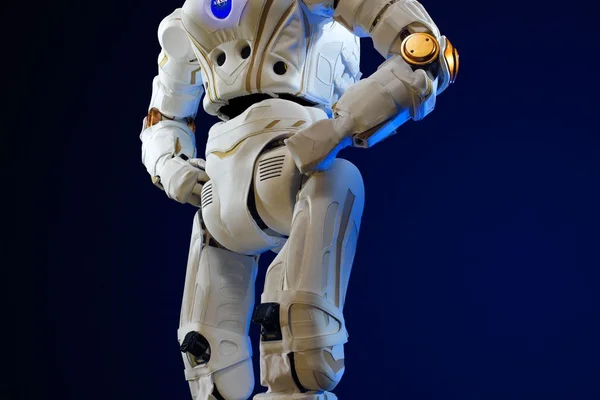
Faraday Future and FF EAI Robotics launch $2,490 FF Nova humanoid robot and $299 Nova Mini
The Los Angeles event pairs a $2,490 developer humanoid with a $299 education robot, days after FFR agreed to buy the Faraday Future robotics business in an all-stock deal valued near $200 million.
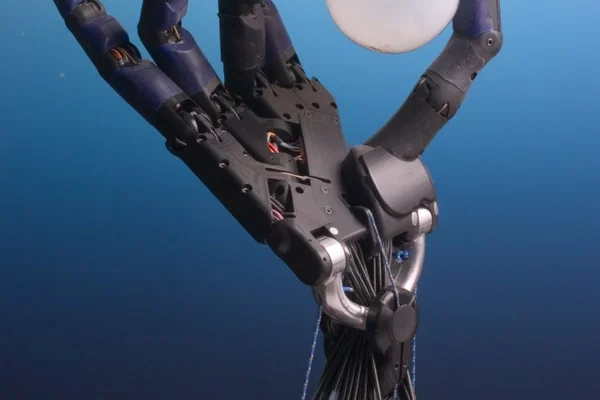
SEC Clears Agility Robotics SPAC Registration, Setting Up First US Listed Humanoid Robot Pure Play
The SEC declared the Agility Robotics merger registration effective on October 13, 2026, setting a November 2 shareholder vote on the Churchill Capital Corp XI combination and a planned Nasdaq listing under AGLT.
DeepSeek to Lead Seed Round for Winverse AI at $400 Million Valuation
The Chinese AI lab has agreed to spearhead a seed financing round worth tens of millions of dollars for a stealth Hangzhou robotics startup founded by a former Tencent scientist.
Comments (0)
Log in or sign up to leave a comment.
No comments yet. Be the first to share your thoughts.