Tiangong Ultra, the bipedal humanoid robot developed by the Beijing Humanoid Robot Innovation Center, ran the 100-meter dash in 9.83 seconds at the inaugural Humanoid Robot Games in Beijing on August 24, the event organizers confirmed. The time was framed by organizers as edging past Usain Bolt's 9.58-second human world record under the competition's rules, although the comparison drew immediate pushback from athletics bodies and biomechanics researchers.
What Happened
The Humanoid Robot Games, organized by the Beijing municipal government and the Chinese Institute of Electronics, brought together 192 teams from 28 countries to compete in 28 events spanning athletics, gymnastics, martial arts, and practical tasks. Tiangong Ultra, which won the world's first humanoid half-marathon in April 2025, took the 100m gold in a head-to-head final against Unitree H1 and Fourier GR-1 prototypes.
Tiangong's 9.83s time was recorded on a regulation outdoor track with wind-legal conditions and using the robot's standard production firmware. The robot stands 1.65 meters tall, weighs 52 kilograms, and uses a custom tendon-driven actuator system that the Beijing Humanoid Robot Innovation Center developed jointly with the University of Tokyo's JSK Lab.
Controversy
World Athletics, the international governing body of track and field, declined to recognize the time as a record, noting that current rules cover only human competitors. Biomechanics researchers pointed out that robots benefit from optimized gait patterns, joint stiffness, and reaction-time advantages that would not be available to humans wearing standardized shoes on a regulation track. Several high-profile athletes, including retired sprinter Yohan Blake, publicly questioned the comparison.
Event organizers defended the framing as a "technological milestone" rather than a direct athletic comparison. The Beijing Humanoid Robot Innovation Center said in a statement that the run "demonstrates the maturity of bipedal locomotion control at human-equivalent speeds" and that the goal of the games is "to inspire the next generation of embodied AI engineers."
Industry Reaction
Humanoid-robot makers are using the competition as a marketing milestone. Agility Robotics, Figure AI, and 1X all announced plans to enter their bipedal platforms in the 2027 games, which are scheduled for Osaka. The competition has emerged as a proving ground for bipedal hardware, with several venture-backed startups citing event placements in fundraising decks.
Investor interest in humanoid robotics remains high. The first half of 2026 saw $4.2 billion in equity funding for humanoid-robot companies globally, up from $2.1 billion in the same period of 2025, according to PitchBook. The SoftBank-1X deal reported on August 27 underscored the category's continued capital intensity.
What to Watch Through Year-End
Three checkpoints follow. The publication of the full Tiangong Ultra gait data and joint torque measurements, expected at the IEEE Humanoids 2026 conference in November, will determine whether the 9.83s time is reproducible outside competition conditions. The Osaka games' expanded event lineup, due to be published in October, will indicate how broadly humanoid platforms are matching human athletic capabilities. And the first commercial deployment of Tiangong Ultra in a factory or warehouse setting, targeted by the Beijing Humanoid Robot Innovation Center for Q4 2026, will be the first real-world test of whether the speed gains translate to industrial value.
Related Articles
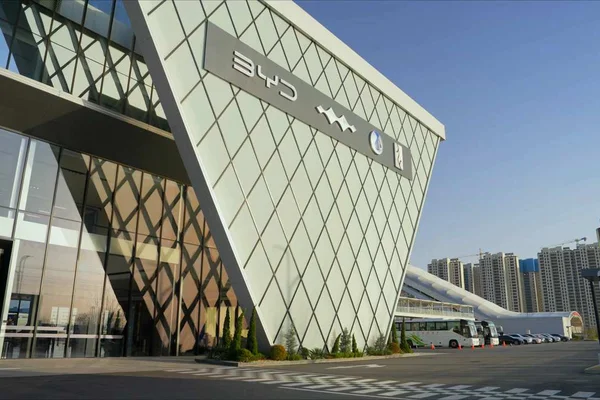
BYD Humanoid Robot Design Emerges in CNIPA Patent as Formal Debut Remains Pending
A design patent published by China's intellectual property office shows a bipedal BYD robot with articulated fingers, but the automaker has not confirmed production plans or a formal launch date.
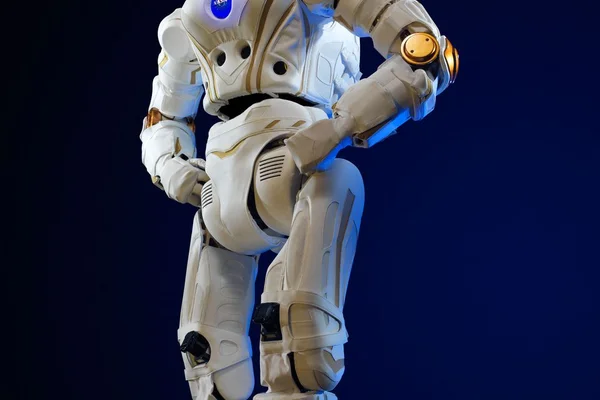
California Regulator Orders REK to Halt Unsanctioned Human Versus Humanoid Cage Fights
California's regulator says REK's September 18 human versus humanoid bout was unsanctioned, prompting a cease-and-desist and questions about old rules for new machines.

Ultra raises $62M to scale warehouse robots and deepen Physical Intelligence partnership
Brooklyn robotics startup Ultra closed a $50 million Series A led by Framework Ventures plus a $12 million seed round, and will run Pi's robot-brain model on its warehouse machines.
Comments (0)
Log in or sign up to leave a comment.
No comments yet. Be the first to share your thoughts.