On September 21, 2026, at the Industry Acceleration Summit held during Climate Week NYC and the United Nations General Assembly, the International Renewable Energy Agency (IRENA), the COP31 Presidency and the Global Renewables Alliance published a new report on the state of global renewable energy deployment. The report arrived after a record-hot northern hemisphere summer, a period that underscored the worsening impacts of human-caused climate change and added urgency to the discussions among world leaders gathered in New York.
The report found that 693 gigawatts (GW) of new renewable power capacity was installed in 2025, a record annual addition. That brought total global installed renewable capacity to 5.15 terawatts (TW) by the end of the year. For context, the new capacity added in 2025 alone is more than half the entire installed power capacity of the United States.
Despite that milestone, the world remains far from the goal that more than 100 countries agreed to at the COP28 climate summit in Dubai in 2023: tripling renewable energy capacity by 2030. To meet that pledge, which requires reaching 11.2 TW, the world must install roughly 1,200 GW of renewable power on average every year through 2030, according to the report compiled by IRENA, the COP31 Presidency and the Global Renewables Alliance. That is more than double the 2025 pace.
UNFCCC executive secretary Simon Stiell, speaking at the Industry Acceleration Summit, said the transition to clean energy is now 'irreversible.' He pointed to the 'brute power of market forces' and noted that renewables had avoided almost half a trillion US dollars in fossil fuel costs. 'That is a mammoth decarbonization dividend,' Stiell said, adding that it exceeds the national GDP of more than three quarters of countries on Earth.
Key Facts
Reuters reported on September 21, 2026 that the global deployment of renewable power must more than double to meet a climate pledge on renewable growth by 2030, even though it hit a record level last year. The report said the world added just over 690 GW of renewable power capacity in 2025, taking total installed capacity to 5.15 TW. That is still less than half of the 11.2 TW target needed to meet the COP28 tripling pledge.
AFP reported on September 21, 2026 that if the growth rate recorded in 2025 holds, the world would reach 10.6 TW by 2030, about 0.6 TW short of the 11.2 TW goal. That gap has narrowed from 0.9 TW in last year's assessment. The report also found that energy efficiency measures are falling short, with energy intensity improving by about 2 percent in 2025, below the 4 percent annual rate needed to meet efficiency-doubling commitments.
The Economic Times reported on September 21, 2026 that rising electricity demand from cooling, artificial intelligence and data centres is limiting the displacement of fossil fuels. Fossil fuels still accounted for 86 percent of global energy in 2025, according to the Energy Institute's Statistical Review of World Energy, published in June. The report recommends upgrading electric grids and combining solar, wind and battery storage to get cost-competitive power around the clock.
Grid investment is a major gap. Nearly 1 trillion US dollars per year on average is needed between 2026 and 2030, the report said, up from 525 billion US dollars in 2025. Francesco La Camera, director-general of IRENA, said in the report: 'Renewables can still close the gap towards 2030, but energy efficiency is falling behind, electricity demand is rising faster than expected, and the grid infrastructure has failed to keep pace.' Ben Backwell, chair of the Global Renewables Alliance, said governments needed to 'make renewables a national economic priority,' including by expanding grids, deploying storage and electrifying homes, transport and industry.
Analysis
The record 693 GW added in 2025 is genuinely significant, but the numbers reveal a stark truth: the world is not on track to meet the COP28 goal. What this really means is that incremental progress, even record-breaking progress, is insufficient when the target requires a doubling of annual deployment. The report's finding that the gap to 11.2 TW has narrowed from 0.9 TW to 0.6 TW if current growth rates persist is encouraging, yet it also confirms that the world would still fall short by a wide margin.
The bigger picture here is that the energy transition is being outpaced by rising demand. David Waskow, director of the international climate initiative at the World Resources Institute, told AFP that positive news is tempered by the fact that renewables are not yet displacing enough fossil fuel use as global energy demand rises. He identified rising demand for cooling in a warming world, along with AI and data centres, as the two largest drivers of increasing energy demand. 'We're going to need to not only push farther and faster on renewables, on electrification as well, but also to make sure that we're reducing the level of fossil fuel consumption,' Waskow said. That warning is backed by the Energy Institute's finding that fossil fuels still supplied 86 percent of global energy in 2025, and that fossil fuel use continued to grow in absolute terms.
Energy efficiency is the other half of the equation, and it is lagging badly. A 2 percent improvement in energy intensity in 2025 is only half the 4 percent annual rate needed to meet the goal of doubling efficiency by 2030. La Camera's comment that efficiency is falling behind, demand is rising faster than expected, and grids have failed to keep pace captures the three bottlenecks. Grid investment must nearly double from 525 billion US dollars in 2025 to almost 1 trillion US dollars per year on average through 2030.
Market forces alone will not close the gap fast enough. Stiell's 'brute power of market forces' has driven record deployment and made renewables the most cost-competitive source of new electricity in most markets, but the report makes clear that policy and investment decisions must accelerate. Backwell's call to make renewables a national economic priority, including electrifying homes, transport and industry, points to the need for governments to treat clean energy as core infrastructure, not just an environmental add-on. The COP31 talks in Turkey in November 2026 are expected to focus on using electricity to power more sectors and push for a new target of electricity meeting 35 percent of global final energy consumption by 2035.
Why It Matters
The gap between current deployment and the COP28 target matters because the climate impacts are already visible and costly. Insurance Journal reported on September 21, 2026 that a strengthening El Niño is stirring up a dangerous mix of typhoons and hurricanes across the Pacific, fueling storms that have killed hundreds, disrupted trade and caused billions of dollars in damage. Pacific cyclones have caused more than 230 deaths since April, media reports show, while natural disasters including three back-to-back storms caused an estimated 8.5 billion US dollars in direct economic losses in China in July alone, according to government statistics. Twelve tropical cyclones formed in the western Pacific and South China Sea in August, the most in a single month since 1961, per the Hong Kong Observatory.
These events are a reminder that the transition to clean energy is not just an environmental aspiration but an economic and humanitarian imperative. The report's finding that renewables avoided almost half a trillion US dollars in fossil fuel costs in 2025 shows the economic dividend of deployment. Yet the continued dominance of fossil fuels, at 86 percent of global energy, means the world is still far from reducing the emissions that drive warming.
The COP28 pledge to triple renewables by 2030 was a landmark commitment by more than 100 countries. Falling short would undermine confidence in international climate cooperation and make it harder to achieve the deeper emissions cuts needed in the 2030s. The narrowed gap from 0.9 TW to 0.6 TW shows that progress is possible, but it also shows how much more is required. With COP31 approaching, governments have a clear opportunity to turn the report's recommendations into concrete policies on grids, storage, efficiency and electrification.
Next Up
The COP31 climate talks in Turkey in November 2026 are expected to focus on using electricity to power more sectors and to push for a new target of electricity meeting 35 percent of global final energy consumption by 2035. The report from IRENA, the COP31 Presidency and the Global Renewables Alliance will serve as a key input. Governments will also need to address the efficiency gap, where the 2 percent improvement in 2025 must rise to 4 percent per year to meet the goal of doubling efficiency by 2030.
If the growth rate recorded in 2025 holds, the world would reach 10.6 TW by 2030, about 0.6 TW short of the 11.2 TW goal. That shortfall, while smaller than last year's 0.9 TW gap, means the world must more than double today's deployment levels. The next few years will determine whether the record additions of 2025 become a stepping stone to the COP28 target or a missed opportunity.
Related Articles

Private Jets Pollute 14 Times More Than Commercial Flights and Are Undertaxed, IPS Report Says
The Institute for Policy Studies says private aviation takes about 16 percent of FAA flight operations while paying under 0.6 percent of aviation trust fund taxes and emitting up to 14 times more per passenger.
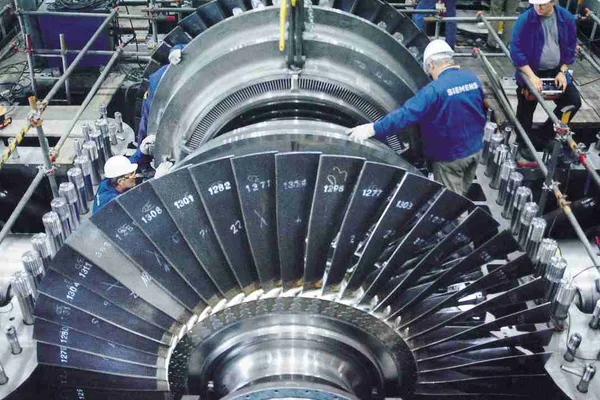
Federal Judge Rules EPA Illegally Terminated 7 Billion Solar for All Program
A Rhode Island federal judge has vacated the EPA's termination of the 7 billion dollar Solar for All program, ordering the agency to restore funding meant to bring rooftop solar to over 900,000 lower income households.
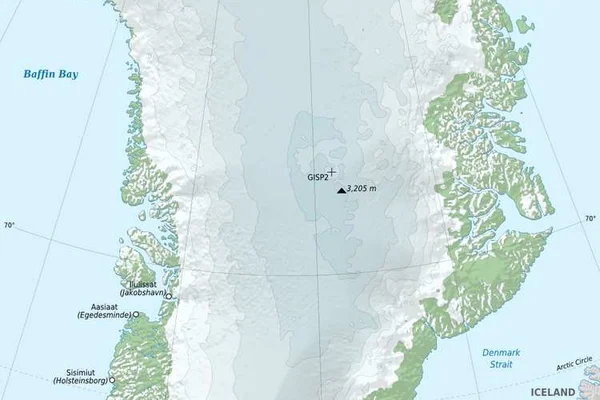
IMBIE satellite record finds polar ice sheets lost 11.3 trillion tonnes since 1979
A new IMBIE assessment in Scientific Data finds Greenland and Antarctica shed 11,309 billion tonnes of ice between 1979 and 2023, lifting global sea level by 31.4 millimetres.
Comments (0)
Log in or sign up to leave a comment.
No comments yet. Be the first to share your thoughts.