For more than a decade, the United States operated an unusual kind of diplomatic service: it published real time air quality readings from its embassies and consulates around the world. The effort began in 2008, when US officials installed a monitor at the embassy in Beijing and made the data public. NPR reported on September 15, 2026 that this step helped spur demand for cleaner air, according to Eric Zou, an environmental economist at the University of Michigan. Over time the State Department expanded the initiative to more than 80 embassies and consulates, and earlier research found that the monitoring contributed to measurable improvements in air quality, especially in low and middle income countries with limited monitoring systems of their own.
That system came to an abrupt halt in March 2025. The Washington Post reported on September 15, 2026 that the Trump administration halted the program that published independent air quality data at more than 80 US diplomatic sites, citing budget constraints. NPR described the same decision as a shutdown of the monitoring program, with the administration citing monetary costs. At the time, the move was framed as a spending reduction. The health and environmental consequences for the host countries were not immediately clear.
On September 14, 2026, a peer reviewed study published online in the Proceedings of the National Academy of Sciences provided new evidence about what happened next. The paper, titled Air pollution after the shutdown of US embassy monitoring, was written by Zoey Yiyuan Zhou, Fanyu Wang, Allen H. Huang and Douglas Almond, researchers affiliated with Columbia University's Climate School and School of International and Public Affairs. Using satellite based measures, the team estimated that local pollution rose by 24 to 33 percent across 46 cities after US reporting stopped. The study will appear in the print issue of PNAS on September 29, 2026, with DOI 10.1073/pnas.2605467123. It was received on February 13, 2026, and accepted on August 3, 2026.
The finding lands in a broader debate about environmental transparency. The study's abstract notes that independent environmental monitoring can lower pollution when governments withhold domestic air quality data, and it warns that past air quality gains are not self sustaining without reliable, real time, publicly accessible pollution information. The authors connect their results to what they call a broader retrenchment in environmental transparency, particularly within the United States. For cities that had come to rely on the US embassy readings, the shutdown removed a source of information that had often been more trusted than local data.
Key Facts
PNAS reported on September 14, 2026 that the study uses a difference in differences design with same country control cities. The researchers analyzed real time satellite derived aerosol optical depth, a measure of how much sunlight is scattered or absorbed by particles in the atmosphere. They found no systematic trends before the halt in US reporting. After reporting stopped, they found a prompt 24 to 33 percent increase in local pollution levels across 46 cities. The main estimate corresponds to a 33 percent increase in aerosol optical depth. The paper was published online on September 14, 2026, and the print issue is dated September 29, 2026.
The study translates those optical depth changes into surface PM2.5, the fine particulate matter that can penetrate deep into the lungs and bloodstream. The preferred conservative translation yields a PM2.5 equivalent increase of about 1.9 micrograms per cubic meter. Alternative approaches yield values between 1.5 and 16.3 micrograms per cubic meter. Those figures represent 0.3 to 3.3 times the World Health Organization annual guideline for PM2.5. The authors note that effects were largest and most persistent in cities with poor substitutes for the US provided data.
NPR reported on September 15, 2026 that the team found no significant trends in air pollution over the 300 days preceding the end of US reporting. About three to four months after reporting ended, pollution had gone up, on average by about 30 percent. The researchers estimate that this translates to about a 4 percent increase in PM2.5. The increase was highest in Southeast Asian cities, including Manila in the Philippines, Rangoon in Myanmar and Vientiane in Laos, according to lead author Zoe Yiyuan Zhou, a Columbia University climate researcher.
Georgia Public Broadcasting reported on September 15, 2026 that the State Department did not respond to a request for comment in time for publication. The same report noted that monitoring may reflect other forms of monitoring, by individuals or local governments, coming online in the wake of the US withdrawal. Independent expert Andrea La Nauze of Deakin University, who was not involved in the study, called it a great study, high quality, and said the program led to sustained improvements in air quality that were continuing to increase after 10 years. She also said that the magnitude of the pollution increase is certainly concerning. The paper's abstract states that the findings suggest past air quality gains are not self sustaining without reliable, real time, publicly accessible pollution information.
Analysis
What this really means is that the value of environmental monitoring is not just informational. It can be behavioral and political. The US embassy program began in 2008 with a single monitor in Beijing, and over the following decade it expanded to more than 80 diplomatic sites. Earlier research found that the readings contributed to measurable improvements in air quality, especially in low and middle income countries with limited monitoring systems of their own. When that benchmark disappeared, the PNAS study suggests, pollution rose.
The study's design strengthens the case. The researchers compared pollution before and after monitoring ceased across 46 cities, using satellite data and a matched difference in differences approach with same country control cities. They found no significant pre trends over the 300 days before the end of US reporting. Then, three to four months after reporting ended, pollution had risen on average by about 30 percent. The timing matters because it rules out many alternative explanations that would have produced gradual changes before the shutdown. The authors also calibrated satellite aerosol optical depth to concurrent pre shutdown embassy PM2.5 readings, which grounds the satellite measure in real world pollution levels.
The bigger picture here is that transparency can have measurable environmental effects, and its removal can have measurable costs. The paper does not prove why pollution rose. The authors cannot say whether the increase came from reduced public pressure, weaker enforcement, changes in local behavior or some other mechanism. But the pattern is consistent with the idea that publicly available, real time data can shame governments and empower citizens. The fact that pollution partly fell again after peaking three to four months after the shutdown, possibly because individuals or local governments started new monitoring, further supports a link between information and outcomes.
The study also arrives amid a wider retrenchment in environmental data. The Washington Post reported on September 15, 2026 that the halt was tied to budget constraints. The PNAS abstract links the embassy shutdown to broader concerns about environmental transparency, particularly within the United States. That context makes the 46 city finding more than a narrow diplomatic story. It is a test case for what happens when a trusted, independent data source goes dark. It is associated with pollution increases that, in the highest estimates, reach 16.3 micrograms per cubic meter, or 3.3 times the WHO annual guideline.
Why It Matters
The health stakes are significant. Fine particulate matter, known as PM2.5, is linked to respiratory and cardiovascular problems. The study estimates that the pollution increase after the embassy shutdown was equivalent to 1.5 to 16.3 micrograms per cubic meter of PM2.5. Even the conservative estimate of 1.9 micrograms per cubic meter is not trivial at the population level. The authors note that this range equals 0.3 to 3.3 times the World Health Organization annual guideline. For cities in Southeast Asia, including Manila, Rangoon and Vientiane, the measured increases were especially high.
The findings also matter for how governments think about data as infrastructure. The US embassy monitoring program cost money, and the Trump administration ended it in March 2025 citing monetary costs and budget constraints. The PNAS study suggests that the program had benefits that were not captured in that budget calculation. Those benefits flowed to people in other countries, which may explain why they were easy to ignore in a domestic spending review. But the study's authors argue that pollution reductions are not guaranteed by previous improvements or by the legacy of reliable environmental data.
Finally, the study raises questions about accountability. The State Department did not respond to a request for comment in time for publication, according to Georgia Public Broadcasting. The paper does not assign blame for the pollution increase, and it cannot say that the shutdown directly caused every additional particle of PM2.5. But it does show a consistent association across 46 cities, with no pre existing trends and with effects that were largest where alternatives were weakest.
Next Up
The researchers and outside experts say more work is needed to understand the mechanisms behind the pollution increase. The study cannot say why pollution rose, and the partial decline after the peak suggests that new monitoring by individuals or local governments may have emerged. Future research could track whether those substitutes persist and whether they are as trusted or as widely used as the US embassy readings.
For now, the PNAS study stands as a peer reviewed estimate of what happened after more than 80 US diplomatic sites stopped publishing air quality data. The print issue is dated September 29, 2026. The DOI is 10.1073/pnas.2605467123. The authors conclude that past air quality gains are not self sustaining. As cities in Southeast Asia and elsewhere continue to grow, the question of who monitors the air, and who gets to see the data, will remain central to public health.
Related Articles

ETH Zurich and VUB Launch Global Glacier Extinction Explorer Mapping Every Glacier
A new interactive map built on Nature Climate Change research projects when each of the world's glaciers could vanish at 1.5C, 2.0C, 2.7C and 4.0C of global warming.
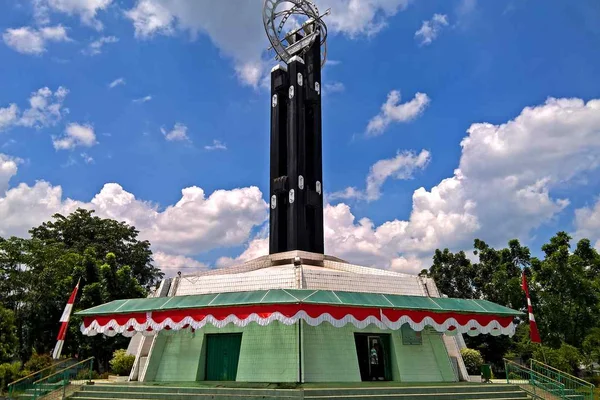
Indonesia Fires Become World's Largest Source of Wildfire Emissions as Pontianak Air Quality Hits 483
A super El Nino has pushed Indonesia's peatland fires to the top of global wildfire emissions, with Pontianak's air quality index reaching 483 on September 13, 2026.
Spain records highest sea water temperature as AEMET confirms 61 heatwave days in 2026
The Dragonera buoy hit 33.02 degrees Celsius on August 5, 2026, the highest sea water reading in Puertos del Estado's network, while AEMET logged a record 61 heatwave days.
Comments (0)
Log in or sign up to leave a comment.
No comments yet. Be the first to share your thoughts.