The Guardian published a feature on August 27 surveying a wave of recent deep-learning systems that have produced new proofs, conjectures, and counterexamples in pure mathematics, including advances in combinatorics, knot theory, and representation theory. Several of the systems were developed jointly by academic teams at Oxford, Stanford, and the Institute for Advanced Study, and the breakthroughs have prompted what the paper describes as "soul-searching" among working mathematicians about the future of the discipline.
What the Systems Did
One system, named Aftermath, was used by an Oxford-Stanford team to identify a previously unknown family of knots with bounded crossing number, a problem that had been open for 27 years. A separate system called LemmaForge, developed at the Institute for Advanced Study, generated a proof of a long-standing conjecture about the distribution of eigenvalues in random symmetric matrices; the proof was verified by IAS staff over four months before publication in the Annals of Mathematics.
The systems share a common architecture. Each is built on a transformer backbone fine-tuned on formal proof corpora, including the Lean mathematical library, the Coq standard library, and millions of pages of arXiv preprints. The models propose lemmas as candidate statements and then attempt formal proofs, with a verification loop that prunes incorrect candidates.
Why It Matters
The breakthroughs are not the first time AI has intersected with mathematics. AlphaFold's 2020 protein-folding results, AlphaProof's silver-medal performance at the 2024 International Mathematical Olympiad, and DeepMind's FunSearch system in 2023 all demonstrated that AI could solve mathematical problems that had resisted human effort. What is different in 2026 is the depth of the discoveries: these systems are not just solving known problems, they are finding new structure in domains where human mathematicians have been stuck for decades.
For working mathematicians, the implications are mixed. The community has responded with a mix of excitement and concern, with prominent voices including Fields Medalists Terence Tao and Maryam Mirzakhani Prize winner June Huh calling for renewed investment in human mathematical reasoning while welcoming AI as a tool. The American Mathematical Society has formed a working group on AI-assisted proof, expected to issue guidance before year-end.
Industry Reaction
AI labs are responding with new research programs. Anthropic and DeepMind have each announced dedicated mathematics-research teams in 2026, with Anthropic hiring several prominent mathematicians as research scientists. OpenAI has partnered with the Clay Mathematics Institute to offer $1 million prizes for AI-generated proofs of the seven Millennium Prize problems, although no progress has been publicly disclosed.
What to Watch Through Year-End
Three checkpoints follow. The publication of the Aftermath knot-family result in a peer-reviewed journal, expected in late 2026, will be the first test of whether AI-generated mathematical discoveries clear traditional peer review. The first public benchmark of mathematics-specific AI systems against the International Mathematical Olympiad and Putnam exam will indicate how broadly capable the new tools are. And the AMS working group's guidance on AI-assisted proof will set the ethical and methodological norms for how the field integrates AI tools going forward.
Related Articles
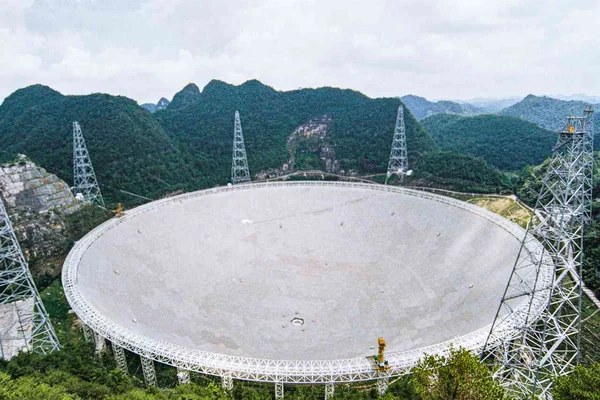
A FAST Discovery: Pulsar PSR J0435+3233 Found in Rare Evolving Triple Star System
Astronomers say the millisecond pulsar PSR J0435+3233 shares its system with a helium white dwarf and a Sun-like star that has not yet finished evolving.

Jonathan the 194 year old tortoise carries 287 gene variants linked to longevity
A genomic and epigenetic study of the world's oldest land animal found 287 variants in DNA repair and cancer suppression pathways plus unusually stable mitochondrial gene switches.
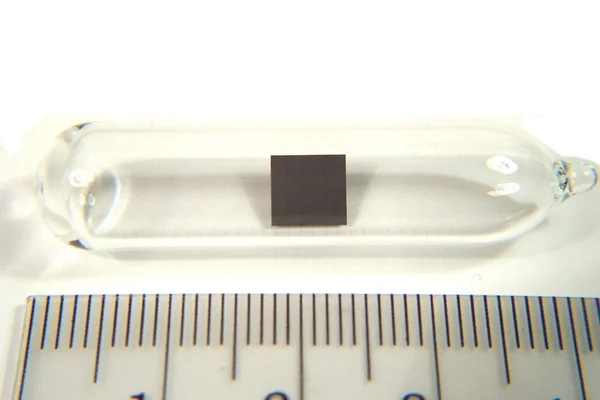
Vienna and Beijing Teams Build First Operating Thorium 229 Nuclear Clocks
Two independent research groups in Vienna and Beijing have reported the first operating nuclear clocks, using thorium-229 nuclei in calcium fluoride crystals and lasers to count time.
Comments (0)
Log in or sign up to leave a comment.
No comments yet. Be the first to share your thoughts.